Introduction
Olympic fencing is one of the oldest and most exciting sports in the Olympic Games. Combining speed, precision, agility, and tactical thinking, fencing is often described as “physical chess” because every move requires careful planning and quick decision-making. Although inspired by historical sword fighting, modern Olympic fencing is a safe and highly regulated sport that attracts elite athletes from around the world.
With three unique disciplines—foil, épée, and sabre—Olympic fencing offers fast-paced action and intense competition. Whether you’re a sports enthusiast or a beginner curious about the game, understanding the basics of Olympic fencing makes watching competitions even more enjoyable.
The History of Olympic Fencing
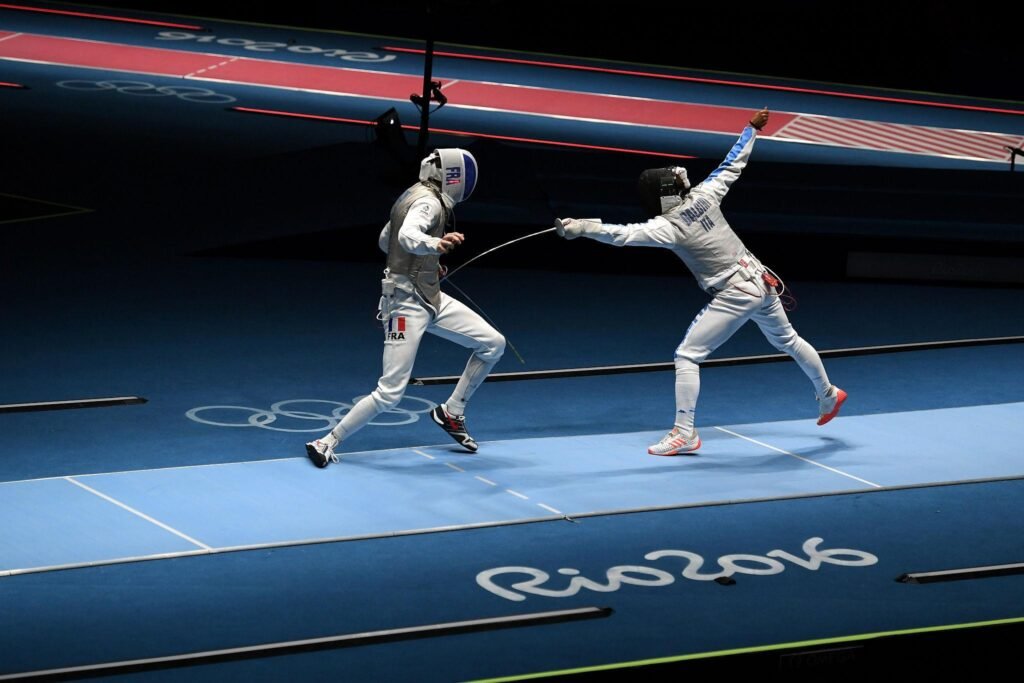
Fencing has its origins in ancient sword combat and became popular in Europe during the Renaissance as a method of self-defense and military training. Over time, it evolved into a competitive sport with standardized rules and protective equipment.
Olympic fencing has been part of every modern Summer Olympic Games since 1896, making it one of the few sports to appear in every edition of the modern Olympics. Women’s fencing events were introduced later, and today both men and women compete in individual and team events across all three weapons.
The sport continues to grow globally, with athletes from Europe, Asia, the Americas, and Africa competing for Olympic medals.
The Three Olympic Fencing Events
Olympic fencing includes three different weapons, each with its own rules, scoring system, and style of play.
Foil
Foil is considered the most technical weapon and is often recommended for beginners. The valid target area is limited to the torso, including the front and back, but excluding the arms, legs, and head.
Foil uses the right-of-way rule, meaning only the fencer who has the attacking priority is awarded the point if both competitors land a touch at nearly the same time. This rule rewards good technique and proper offensive strategy.
Épée
Épée is the heaviest of the three weapons and emphasizes patience and tactical movement. In this discipline, the entire body is a valid target, from head to toe.
Unlike foil, épée does not use the right-of-way rule. If both athletes score within a fraction of a second, each receives a point. This creates a slower but highly strategic style of competition where timing and precision are essential.
Sabre
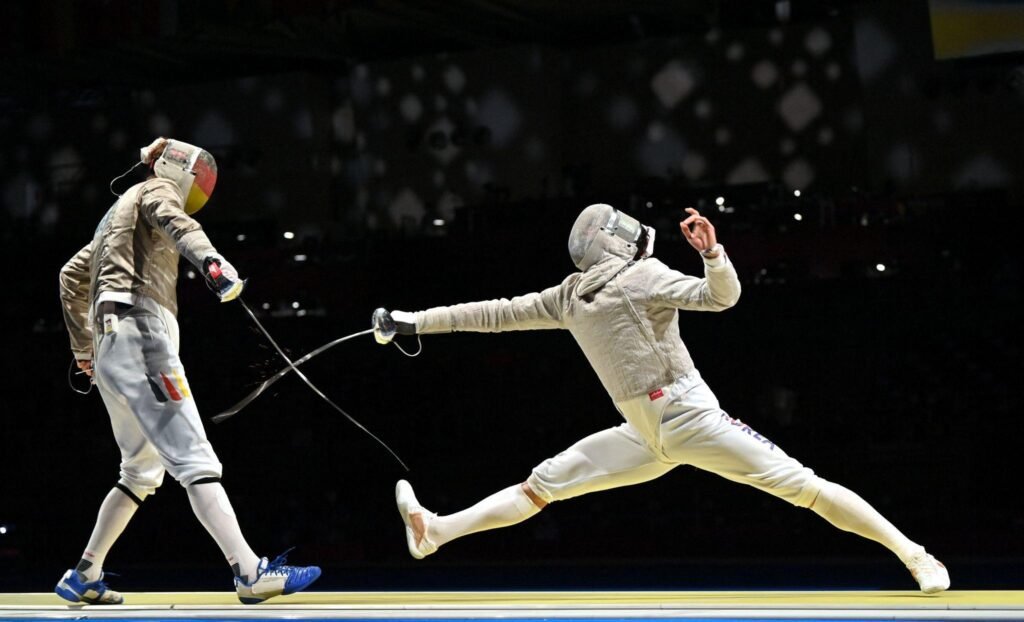
Sabre is the fastest and most aggressive fencing discipline. Competitors can score using both the edge and the tip of the blade. The target area includes everything above the waist except the hands.
Like foil, sabre follows the right-of-way rule. Sabre matches feature explosive attacks, rapid footwork, and lightning-fast reactions, making them exciting to watch.
Rules of Olympic Fencing
Olympic fencing takes place on a narrow strip called a piste, which is 14 meters long. Two fencers compete while wearing protective equipment and using electronic scoring systems that detect valid touches.
The objective is simple: score points by making legal touches on the opponent’s valid target area while avoiding being touched yourself.
Individual matches are generally played until one fencer reaches 15 points or the match time expires. Team events involve multiple bouts, with the combined score determining the winner.
Qualified referees oversee every match to ensure the rules are followed correctly and fairly.
Equipment Used in Olympic Fencing
Safety is one of the most important aspects of Olympic fencing. Modern equipment is designed to protect athletes while allowing maximum movement and flexibility.
Essential fencing equipment includes:
- Protective fencing mask
- Fencing jacket
- Underarm protector
- Fencing glove
- Breeches (special fencing trousers)
- Long socks
- Fencing shoes
- Foil, épée, or sabre
- Electronic body cord and scoring system
The electronic scoring system ensures accurate results by registering valid touches instantly.
Skills Required to Succeed
Olympic fencing demands both physical fitness and mental sharpness. Elite fencers train for years to master their technique and improve their reaction speed.
Some of the key skills include:
- Quick reflexes
- Excellent footwork
- Hand-eye coordination
- Balance and agility
- Tactical thinking
- Precision and timing
- Focus under pressure
Unlike many sports, success in fencing depends as much on strategy as it does on physical ability.
Benefits of Learning Fencing
Fencing offers numerous health and personal development benefits for participants of all ages.
Physically, it improves cardiovascular fitness, coordination, flexibility, balance, and muscle strength. Constant movement helps build endurance while developing fast reactions.
Mentally, fencing enhances concentration, discipline, confidence, and decision-making. Every match requires athletes to analyze their opponent’s tactics and adapt quickly.
The sport also teaches respect, patience, sportsmanship, and resilience, making it an excellent activity for children, teenagers, and adults alike.
Why Olympic Fencing Is Growing in Popularity
Olympic fencing continues to attract new participants because it offers something different from traditional team sports. It is a sport where intelligence, technique, and determination often matter more than size or strength.
International competitions receive millions of viewers, and fencing clubs around the world now provide beginner-friendly coaching programs. Advances in electronic scoring, improved broadcasting, and increased Olympic exposure have also helped make the sport more accessible and exciting for global audiences.
Conclusion
Olympic fencing is a unique sport that blends centuries of tradition with modern athletic performance. Its combination of speed, precision, strategy, and discipline makes it one of the most fascinating events in the Olympic Games.
Whether you enjoy watching elite athletes compete for Olympic medals or are interested in learning the sport yourself, fencing offers an exciting challenge for both the body and mind. As its popularity continues to grow worldwide, Olympic fencing remains a shining example of skill, sportsmanship, and competitive excellence.